 Slope Game
Slope Game Turns Two Simple Controls Into a High-Speed Balancing Act
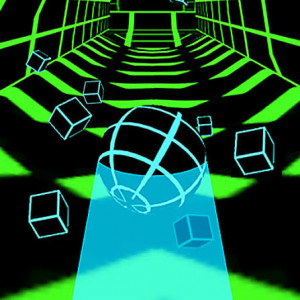
Slope Game is an endless 3D running game where a ball rolls forward automatically across a floating course filled with slopes, narrow platforms, gaps, sudden drops, offset sections, and red hazards.
There is no finish line waiting at the end. Every run is about maintaining control for as long as possible while the course becomes increasingly difficult to read at higher speed.
The controls are deliberately minimal. Left and right movement are enough to guide the ball, but every steering input changes its position and momentum before the next section arrives. That makes seemingly small decisions increasingly important as the pace rises.
Two Keys Control the Entire Run
On a keyboard, the ball can be steered with the Left and Right Arrow keys or A and D.
- Left Arrow / A: steer left.
- Right Arrow / D: steer right.
There is no conventional jump button required for normal movement. Ramps, drops, gaps, and changes in track elevation can naturally send the ball into the air.
This keeps the control scheme simple while making precision much more important. Success depends less on learning more buttons and more on understanding how long to steer, when to stop correcting, and how one movement affects the next part of the course.
Momentum Makes Every Steering Input Continue Beyond the Moment
Steering in Slope Game is not the same as instantly selecting a lane.
The ball continues carrying lateral movement after a directional adjustment. Holding left or right too long can push it much farther across the track than intended, while an aggressive counter-correction can create a second problem immediately afterward.
This creates a continuous balancing act. Strong runs rely on controlled inputs rather than repeated full-strength movements from one side to the other.
The faster the ball becomes, the more dangerous oversteering becomes because there is less time and track space available to recover from unnecessary sideways movement.
The Track Itself Is the Main Obstacle
Slope Game does not need enemies to create pressure. The floating course provides most of the challenge.
Track sections can change in width, elevation, angle, and horizontal alignment. A broad surface can suddenly narrow. A straight descent can lead toward a platform positioned off-center. A seemingly safe stretch can end in a gap or exposed drop.
Because the ball never stops moving forward, every change in geometry affects the route immediately.
Narrow Platforms Punish Excessive Movement
Wide surfaces provide room to recover from an imperfect line. Narrow sections leave much less space between the ball and an exposed edge.
The safest approach is usually to establish a stable trajectory before entering a thin platform instead of making a large correction after the ball is already on it.
At high speed, even a small steering mistake can push the ball beyond the available surface before another correction takes effect.
Exposed Edges Are Dangerous Even Without Obstacles
A section does not need a red hazard to be dangerous. Many platforms have completely open sides, so too much lateral movement can end the run even on an otherwise empty stretch.
This makes positioning a constant concern. The ball needs enough room to respond to whatever appears next without drifting unnecessarily toward an edge.
Offset Platforms Require Early Alignment
Not every new platform continues directly from the center of the previous one.
An upcoming surface may sit farther left or right, forcing the ball to begin repositioning before reaching the transition.
Waiting until the final moment can create an impossible angle. Reading the alignment early allows a gradual adjustment while there is still room to control the trajectory.
Gaps Turn Steering Into a Landing Problem
Breaks between platforms introduce a different kind of challenge because the ball can become airborne without a manual jump command.
The important decision happens before leaving the current surface.
If the ball approaches a gap from a poor horizontal position, its natural trajectory may carry it outside the next platform. Entering from a stable line greatly improves the chance of landing safely.
A Safe Landing Must Also Prepare the Next Move
Clearing a gap is only half of the problem.
A landing near the edge, directly in front of a red obstacle, or at a bad angle can turn a successful jump into an immediate failure.
The best approach is therefore not simply to ask whether the ball can reach the next platform, but where it will arrive and how much control will remain afterward.
Red Obstacles Force You Away From the Safest Line
Red hazards stand out clearly against the darker environment and illuminated track, making them easy to recognize as immediate threats.
Colliding with one ends the attempt rather than reducing a health bar, so obstacle avoidance must be complete.
The difficulty comes from where these hazards are positioned. A red obstacle placed in the center of a platform can force the ball toward one side, but moving too far creates another danger at the exposed edge.
The strongest correction is usually the smallest movement that creates enough clearance.
Centering Is Useful Because It Preserves Future Options
When the course allows it, keeping the ball near a balanced central position creates room to respond in either direction.
A ball already near the left edge has fewer options if the next obstacle also requires movement left. A more central line leaves additional space available for both types of correction.
This is not a rule that the ball must always remain perfectly centered. Upcoming platforms, hazards, and transitions can require very different lines.
The useful principle is to return toward flexible space whenever the course gives enough room to do so.
Speed Is the Real Difficulty System in Slope Game
The controls do not become more complicated as the run continues. The amount of time available to use them becomes smaller.
Early sections allow deliberate steering. Later, the same type of obstacle can become much harder because the ball reaches it before a late correction has time to work.
This means speed changes more than reaction time. It changes how far ahead the course needs to be read and how aggressively steering can safely be used.
Higher Speed Rewards Earlier Decisions
Watching only the area immediately around the ball becomes less effective as the pace increases.
By the time a hazard is close, there may already be too little track left to avoid it smoothly.
Looking farther ahead reveals upcoming obstacles, gaps, narrow sections, and platform alignment while there is still enough distance to choose a controlled route.
Small Corrections Become More Valuable
A long steering input creates greater lateral displacement. At low speed, there may be enough space to recover. At high speed, the next platform or obstacle can arrive before that recovery is complete.
Shorter inputs help preserve a stable line and reduce the chance of entering a cycle of left-right overcorrection.
Oversteering Can Be More Dangerous Than the Original Hazard
A red obstacle naturally encourages a quick reaction, but avoiding it with too much movement can send the ball straight off the opposite side of the track.
This problem becomes worse when several rapid corrections are made in sequence.
One movement creates sideways momentum. Another tries to cancel it. A third attempts to correct the second. At increasing speed, that chain can quickly turn a manageable situation into complete loss of control.
Smoother steering breaks that cycle.
The 3D Camera Makes Distance Part of the Challenge
Slope Game uses a behind-the-ball perspective that exposes upcoming sections while reinforcing the feeling of speed.
That viewpoint also requires accurate depth judgment.
An obstacle that appears distant can arrive very quickly. A gap that looks small may require careful alignment, while a platform that seems wide in the distance may provide much less usable space once the ball reaches it.
Repeated runs gradually improve the ability to judge how much time and distance remain before a visible feature becomes an immediate problem.
One Mistake Can End the Entire Run
Slope Game has no traditional health system that allows several collisions or falls before failure.
The ball is either still moving safely through the course or the attempt has ended.
Falling from the track or colliding with a lethal obstacle means starting another run, which makes consistency more important than occasional spectacular recoveries.
A long attempt requires many correct decisions to be connected without the single mistake that ends everything.
Score Measures How Far a Run Can Survive
The score gives each attempt a clear objective even though there is no conventional final stage.
Surviving farther produces a better result, so improvement can be measured directly from one run to the next.
A failed attempt can still represent progress if the ball traveled farther, handled a previously difficult section more cleanly, or maintained control at a higher speed than before.
Slope Game Is Built Around an Endless Retry Loop
The structure is simple:
- Start a run.
- Let the ball accelerate through the course.
- Read the upcoming track.
- Steer around hazards.
- Align for gaps and new platforms.
- Adapt as speed increases.
- Survive for as long as possible.
- Crash or fall.
- Restart and try to beat the previous result.
There is very little downtime between failure and another attempt. That makes improvement strongly connected to practice rather than unlocking a large collection of new abilities.
Better Runs Begin by Looking Beyond the Ball
Reaction speed helps, but anticipation becomes more valuable as the course accelerates.
A hazard recognized early can be avoided with a small controlled adjustment. The same hazard noticed at the last possible moment may require a sharp movement that creates additional risk.
Strong runs therefore depend on reading what comes next rather than staring only at the current position of the ball.
Prepare for Narrow Sections Before Entering Them
Thin platforms leave very little room for correction.
Instead of reaching one from a poor angle and attempting to fix the line while already crossing it, position the ball beforehand.
A stable entry reduces the amount of steering needed while the track is at its narrowest.
Plan Landings Before the Ball Becomes Airborne
When a ramp, gap, or drop is approaching, the next usable surface should already be part of the route decision.
The goal is not merely to remain in the air long enough to reach the next platform. The goal is to arrive in a position that remains controllable.
Landing near the middle of usable space or on a clean line can make the following section much easier than barely reaching the platform near one of its edges.
Recover Immediately After Avoiding a Hazard
Clearing an obstacle is only the first half of an avoidance maneuver.
Once the ball has passed the danger, continued steering can become unnecessary and risky.
Regaining a stable trajectory prevents the movement used to avoid one obstacle from carrying the ball into the next problem.
Slope Game Gets Harder Without Ever Needing More Controls
The difficulty curve comes from applying the same simple movements under increasingly unforgiving conditions.
- Higher speed reduces reaction time.
- Narrow platforms reduce correction space.
- Gaps make approach positioning important.
- Offset surfaces demand earlier alignment.
- Red hazards force the ball away from otherwise comfortable lines.
- Airborne transitions make landing position part of the route.
- Exposed edges punish excessive lateral movement.
- Rapid transitions leave less time to stabilize.
The result is a strong skill curve created from an extremely small control system.
Minimal Visuals Help the Course Stay Readable at High Speed
The visual style supports the mechanics directly.
The dark environment makes the illuminated track easy to identify, while red hazards create strong contrast against safer surfaces.
That clarity becomes more important as the ball accelerates because there is less time available to interpret what lies ahead.
The minimalist presentation keeps attention focused on the route, the ball, and the next dangerous section instead of filling the screen with unnecessary visual information.
Why Slope Game Keeps Pulling You Into Another Run
A run can end almost instantly, but restarting creates an immediate opportunity to improve.
There is always a simple target for the next attempt: travel farther, steer more cleanly, survive the section that caused the previous crash, or push the score beyond the last result.
Better anticipation leads to better positioning. Better positioning produces safer transitions. Cleaner steering creates longer survival, and longer survival leads to higher scores.
That loop is what gives Slope Game its replay value. The controls remain simple from the first second onward, but maintaining precision becomes progressively harder as speed, momentum, track geometry, and limited reaction time combine into one continuous test of control.





Discussion about: Slope Game
0