 Escape Road 2 Game
Escape Road 2
Escape Road 2 – Outsmart the Police and Survive the Ultimate Getaway
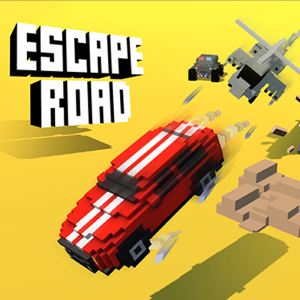
Escape Road 2 is a fast-paced driving survival game that turns a bank robbery getaway into an unpredictable pursuit across a sprawling 3D environment. Police cars swarm the streets, helicopters appear overhead, and increasingly aggressive law enforcement units attempt to bring the escape to an end. Staying ahead requires sharp driving, quick decisions, and the ability to abandon a damaged vehicle before getting trapped.
Unlike a conventional racing game, Escape Road 2 has no finish line to reach. The objective is to survive the police chase, increase your score, collect cash, and keep moving for as long as possible. Every intersection offers another escape route, but heavy traffic, dangerous obstacles, and incoming police vehicles can transform an open road into a dead end within seconds.
The sequel introduces a particularly important survival mechanic: the ability to leave your vehicle, run on foot, and enter another car. This creates new escape opportunities when a vehicle is destroyed, surrounded, or unable to move. Combined with an expanding environment, varied vehicles, responsive drifting, and escalating police pressure, the result is an arcade getaway experience built around continuous improvisation.
How to Play Escape Road 2
The escape begins near a bank, with a getaway vehicle ready to enter the surrounding city streets. Police officers quickly respond, forcing you to drive through intersections, avoid traffic, and find routes that prevent pursuing vehicles from surrounding your car.
Your vehicle moves forward automatically, allowing you to concentrate on steering and controlling its direction. As the pursuit intensifies, you must use tight turns, reverse maneuvers, and carefully timed drifting to avoid collisions.
The basic gameplay involves several connected actions:
- Drive away from the bank and avoid approaching police vehicles.
- Navigate city streets, intersections, and open areas to maintain an escape route.
- Use sharp turns and controlled drifting to evade pursuing officers.
- Collect cash when a safe opportunity appears.
- Abandon damaged or trapped vehicles and search for another car.
- Survive escalating police pressure to increase your score.
The most important rule is to keep an escape route available. Driving at high speed is useful when the road is clear, but speed alone cannot overcome a police blockade or a poorly chosen turn. Successful escapes depend on recognizing danger early and adapting before the situation becomes impossible to control.
Escape Road 2 Controls
The control system emphasizes directional driving and vehicle interaction rather than complex racing inputs.
| Control | Action |
|---|---|
| A / Left Arrow | Steer left |
| D / Right Arrow | Steer right |
| S / Down Arrow | Brake or reverse |
| Space | Exit or enter a vehicle |
| Pause button | Pause gameplay |
Since the vehicle accelerates automatically, steering becomes the primary driving skill. Holding a turn for too long can make the car spin or slide into an obstacle, while a small directional adjustment may be enough to avoid an approaching police vehicle.
Escape Your Car and Steal Another Vehicle
Vehicle switching is one of the defining features of Escape Road 2. A dangerous collision or police blockade no longer means you must remain inside a disabled car until the pursuit ends. You can leave the vehicle, escape on foot, and enter another available car to continue the getaway.
This mechanic fundamentally changes how each chase unfolds. Your current vehicle is no longer the only means of survival. When its position becomes dangerous, the surrounding environment may offer an alternative route through another vehicle.
When Should You Abandon Your Car?
Leaving a vehicle is most useful when it can no longer provide a reliable escape. Several situations can make switching vehicles a better option than continuing to drive:
- Multiple police cars have surrounded the vehicle and blocked its movement.
- A severe collision has left the car damaged or difficult to control.
- The vehicle is trapped against a building, obstacle, or another car.
- A nearby vehicle offers a possible escape from the current blockade.
However, exiting a car too early creates additional danger. A character on foot is more exposed to pursuing officers and may struggle to reach another vehicle if police units already control the surrounding area.
Before abandoning your car, identify a nearby vehicle and the clearest route toward it. A quick, deliberate transfer is safer than running without a destination while officers close in.
How to Enter Another Car
After leaving your vehicle, move toward another accessible car. When the interaction becomes available, use the vehicle entry control. The interface displays an entering action as the character gets into the new vehicle.
Once inside, the chase returns to vehicle-based movement. You can immediately begin steering away from approaching police units and continue building your score.
The ability to resume driving after leaving a trapped vehicle creates a second chance within the same pursuit. Learning when to make that transition is often more valuable than attempting to force a damaged car through an impossible blockade.
Surviving Police Attacks on Foot
Driving and on-foot escape use different survival conditions. While inside a car, the main concerns are collisions, blocked movement, and vehicle damage. Outside the car, the character becomes directly vulnerable to police attacks.
A heart-based health indicator appears during on-foot sequences. The display can show three hearts, and these hearts decrease as the character takes damage. Losing health places additional pressure on the decision to find another vehicle quickly.
Officers can pursue the character beyond ordinary roads, including grassy areas and spaces near buildings. Simply leaving the car does not end the chase or eliminate the wanted level.
For a safer on-foot escape, avoid running toward groups of officers, keep moving through available open space, and prioritize reaching an accessible vehicle. Walking should generally serve as a temporary transition between cars rather than a long-term substitute for driving.
Wanted Levels and Escalating Police Pursuits
The wanted system makes Escape Road 2 increasingly demanding as a pursuit continues. Police badge indicators represent the level of law enforcement attention, while additional units create more dangerous situations on the roads.
Early encounters involve ordinary police vehicles attempting to follow and intercept the getaway car. As the chase develops, the presence of heavier units and aerial support increases the difficulty of remaining free.
Police Cars and Coordinated Roadblocks
Standard police cars form the foundation of the pursuit. They approach through intersections, follow the escape route, and can converge around the vehicle when it becomes trapped.
The greatest danger is not always an individual pursuing car. Several vehicles can occupy different sides of the road at once, removing the space needed to accelerate or turn.
Police vehicles may also collide with one another. These accidents can create temporary openings, but damaged or stationary cars can become additional obstacles. Always examine the available space before attempting to drive through a cluster of vehicles.
Armored Vehicles and Heavier Pursuit Units
Higher-pressure chases introduce larger law enforcement vehicles, including armored units. Their size makes crowded streets and narrow spaces particularly dangerous because a single large vehicle can occupy much of an escape route.
When a heavy unit approaches, avoid entering confined areas without another exit. Wider intersections and open terrain generally offer more room to change direction, although they do not guarantee safety.
Helicopters and Aerial Pressure
Police helicopters add another visible layer to the pursuit. Their presence reinforces the sense that the getaway is expanding beyond an ordinary street chase.
With police forces operating across multiple parts of the environment, survival depends on maintaining movement rather than relying on one predictable route.
The exact score thresholds for individual police units are not essential to mastering the chase. What matters is recognizing that a longer escape can expose you to greater pressure and more difficult combinations of hazards.
Explore the City, Desert, and Airport
Escape Road 2 features a connected 3D environment that extends beyond the streets surrounding the starting bank. Its low-poly buildings, colorful terrain, and elevated camera perspective help distinguish major routes and obstacles during high-speed pursuits.
Different areas present different driving challenges. Knowing how to use each type of terrain can help you avoid becoming surrounded.
City Streets and Busy Intersections
The city contains buildings, intersections, moving traffic, and multiple connecting roads. These features create frequent opportunities to change direction and break away from pursuing vehicles.
Sharp turns at intersections can be particularly effective when police cars are approaching along a straight route. However, intersections also introduce cross traffic and additional vehicles that may block the intended turn.
A good escape route should offer more than one possible direction. Driving between closely packed buildings without checking the exit can leave a vehicle trapped against a solid obstacle.
Residential Areas and Open Grassland
Lower buildings, grassy spaces, scattered trees, and small obstacles create a different navigation challenge outside the densest city streets.
Open areas can provide room for wide turns and alternative routes around traffic congestion. However, scattered objects still require attention, and police units may approach from directions that would be blocked by buildings in the city.
Use these spaces to create separation when the roads become crowded, but avoid assuming that open ground is completely free of hazards.
Desert Terrain and Large Landmarks
Desert sections introduce sandy ground, rocks, cacti, and distinctive geometric structures, including pyramid-like landmarks. These environments offer broad spaces for directional changes while replacing city traffic patterns with environmental obstacles.
Large open areas can help avoid certain roadblocks, but the lack of closely spaced buildings also means approaching police vehicles may have fewer barriers in their path.
Watch for rocks and fixed structures before making aggressive turns. The visible tire marks on sandy surfaces also emphasize the vehicle's sliding movement during changes of direction.
Airport and Industrial Areas
The airport environment includes runways, aircraft, fences, and large structures. Nearby industrial-style sections feature additional vehicles and obstacles that can affect navigation.
Wide paved spaces may appear ideal for escaping, but fences and large installations can restrict the available routes. Entering an enclosed section without identifying an exit can make the pursuit substantially more dangerous.
Aircraft and helicopters form part of the environment and police activity, but their appearance should not be confused with confirmed access to flyable vehicles.
Master Drifting, Sharp Turns, and Vehicle Collisions
Vehicle handling is central to Escape Road 2. Cars can slide during aggressive steering, produce visible tire marks, and rotate after collisions. These reactions make steering decisions important even when no complex acceleration system is required.
Using Drifts to Escape Pursuing Cars
Drifting allows the vehicle to change direction while maintaining movement, making it useful when turning through intersections or escaping a police car approaching from behind.
To perform more controlled turns, begin steering before reaching the obstacle or intersection. Avoid holding the direction too long, especially when the road ahead contains parked vehicles, buildings, or cross traffic.
The goal is not to maintain the longest possible drift. It is to redirect the car toward open space while minimizing the risk of losing control.
Why Collisions Matter
Not every collision immediately ends the escape. Some impacts cause a vehicle to rotate, slide, or continue moving after contact. More severe accidents can leave cars overturned, smoking, burning, or unable to continue.
These differences make it important to distinguish a recoverable impact from a situation where abandoning the vehicle is the better choice.
Collisions between police vehicles can also affect the surrounding road. A pursuing car may temporarily block another officer, but the resulting wreck can become a dangerous obstruction for your own vehicle.
When approaching a pileup, search for a visible opening instead of accelerating directly into the center of the collision.
Earn Cash, Increase Your Score, and Unlock Vehicles
Escape Road 2 separates the score earned during a pursuit from the cash accumulated across multiple attempts. Understanding this distinction helps explain both the immediate survival objective and the longer-term progression system.
Score and Survival Progress
The score counter increases as the escape continues. Longer pursuits create opportunities to reach higher totals, but they also expose the getaway vehicle to additional police activity and potentially dangerous situations.
When the character is arrested, the current run ends and the score resets for the next attempt. This makes a high score a measure of success within an individual escape rather than a permanent total carried through every restart.
To improve your results, concentrate on keeping the chase alive instead of taking unnecessary risks for small short-term advantages.
Collecting Cash During the Chase
Cash is tracked separately from the score. Money pickups can appear around the environment, providing an additional objective while driving through the map.
Unlike the score counter, accumulated cash can remain available after an arrest and restart. This gives individual attempts lasting value even when a getaway ends unsuccessfully.
However, collecting money should not take priority over immediate survival. A pickup located near a police blockade or hazardous intersection may not justify the risk of losing the current run.
Vehicle Collection and Unlocks
The game includes vehicle-related progression features, with menu elements associated with cars and randomized rewards. Accumulated cash supports the broader vehicle collection system, creating an incentive to continue playing beyond improving a single score.
Different vehicles introduce variety through their appearance, size, and handling characteristics. A compact car can feel different from a larger vehicle when navigating tight corners, narrow streets, and crowded intersections.
There is an important distinction between unlocking another vehicle and upgrading an existing one. Vehicle collection should not be confused with an independently confirmed engine tuning, tire upgrade, or turbo customization system.
When choosing a getaway car, prioritize how effectively it can navigate obstacles and maintain an escape route rather than assuming that a larger vehicle is always superior.
Escape Road 2 Tips for Longer Police Chases
Surviving difficult pursuits requires combining driving skills with good route selection and vehicle management. These strategies address some of the most dangerous situations in the game.
1. Avoid Driving Straight for Too Long
A long, predictable route can allow pursuing vehicles to close the distance. Use suitable intersections to change direction before the police establish a blockade ahead.
Turning constantly is not the solution, however. Choose intersections with enough space to complete the maneuver safely.
2. Keep an Escape Route Available
Before entering a narrow street, enclosed area, or space between buildings, identify where the vehicle can go next. A route with multiple exits provides greater flexibility when police cars approach from different directions.
Avoid driving toward a dead end simply because the immediate path appears clear.
3. Use Open Areas Carefully
Grasslands and desert sections can offer more maneuvering room than crowded city streets. Their wider spaces may help you turn away from a blockade or change direction without striking traffic.
Nevertheless, rocks, vegetation, large structures, and pursuing vehicles remain hazards. Open terrain is useful for repositioning, not guaranteed protection.
4. Never Wait Too Long to Leave a Trapped Vehicle
If your car is heavily damaged or surrounded, consider whether another vehicle is accessible. Waiting until officers completely block every direction can remove the opportunity to escape on foot.
Make the decision while a clear route still exists, and move directly toward the replacement vehicle.
5. Limit Your Time Outside the Car
On-foot movement offers freedom when a vehicle cannot continue, but it also exposes the character to direct damage. The heart-based health system makes prolonged running near officers especially risky.
Plan the transfer before exiting and avoid unnecessary detours.
6. Learn to Control the End of a Drift
Entering a turn is only half of the maneuver. The vehicle must also be aligned with a safe direction afterward.
Avoid oversteering into buildings or oncoming traffic. Controlled directional changes are generally more useful than dramatic slides that leave the car facing another obstacle.
7. Use Police Collisions to Find Openings
When several pursuing vehicles converge, they may collide and temporarily interfere with one another. Watch their movement to identify a clear path around the resulting congestion.
Do not assume every collision creates an escape opportunity. A pileup may also block the entire road.
8. Prioritize Survival Over Risky Cash Pickups
Cash helps with longer-term progression, but a dangerous pickup can end a promising run. Collect money when the surrounding route is clear and return your attention to the police pursuit immediately afterward.
What Makes Escape Road 2 Different From Escape Road?
Escape Road established the appeal of a continuous police pursuit built around arcade driving, evasive turns, and survival-based scoring. Escape Road 2 expands that concept by making the character's survival less dependent on a single getaway vehicle.
The ability to leave a car and enter another vehicle is the most significant gameplay difference. Instead of treating a trapped or damaged car as the end of every escape opportunity, the sequel allows the pursuit to continue through on-foot movement and vehicle switching.
The heart-based survival mechanic adds consequences to leaving the protection of a vehicle. Meanwhile, heavier police units, varied environments, and a broader range of escape situations demand more flexible decisions.
This creates a gameplay experience where driving skill remains essential, but knowing when to stop driving becomes equally important. A successful escape may involve several vehicles, changes of terrain, close encounters with officers, and carefully timed decisions made outside the car.
How to Avoid Getting Arrested in Escape Road 2
Arrest is the main failure condition. When the getaway ends, the game displays a wanted poster with an "ARRESTED" message, marking the conclusion of the current run.
The most common dangerous situations involve becoming surrounded by police vehicles, crashing into fixed obstacles, losing control near traffic, or remaining exposed on foot while officers attack.
A reliable survival approach is to evaluate three things continuously: the condition of your current vehicle, the direction of the nearest police units, and the amount of open space available for your next movement.
If the car remains controllable and a clear road exists, continuing to drive is usually the most straightforward option. If the vehicle is trapped but another car is accessible, leaving it may offer a second chance. If officers already occupy the surrounding area, avoiding direct confrontation and moving toward an open route becomes especially important.
No single driving pattern guarantees unlimited survival. The pursuit changes as traffic, obstacles, police vehicles, and the surrounding terrain interact. Adapting to those changes is the key to maintaining longer escapes.
Keep the Getaway Alive in Escape Road 2
Escape Road 2 builds its challenge around more than fast driving. Its combination of police pursuits, vehicle switching, on-foot survival, drifting, cash collection, and varied environments creates an arcade experience where every escape can unfold differently.
Learning the controls is only the beginning. Higher scores depend on recognizing incoming roadblocks, choosing routes with multiple exits, understanding how vehicles react during sharp turns, and knowing when abandoning a car is safer than staying inside.
Play Escape Road 2 online, experiment with different escape routes, and develop the quick decisions needed to survive increasingly dangerous pursuits. Every successful getaway provides another opportunity to improve your score, accumulate cash, and extend the chase before the police finally close in.











Discussion about: Escape Road 2
0