 Slope 3 Game
Slope 3
Slope 3 – Keep the Ball Rolling Through a Neon 3D Challenge
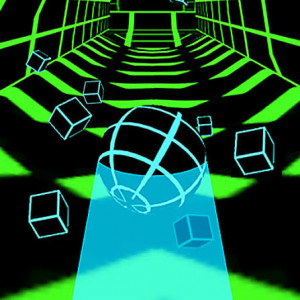
Slope 3 is a fast-paced 3D arcade game built around precise steering, continuous movement, and survival on unpredictable tracks. A glowing ball rolls forward through a futuristic environment filled with steep slopes, narrow platforms, sharp transitions, and large geometric obstacles. Staying on the track becomes increasingly demanding as the route changes shape and speed boosts leave less time to react.
The objective is straightforward: keep the ball moving, avoid collisions, and build the highest score possible. However, reaching a high score requires more than quick reactions. Every slope, platform edge, and obstacle arrangement influences the safest route forward. A well-timed adjustment can carry the ball through a difficult section, while excessive steering can send it off the track.
How to Play Slope 3
Slope 3 begins with the ball automatically moving forward along an elevated course. The main task is to control its horizontal position, guiding it across changing surfaces while avoiding hazards.
The course combines relatively wide paths with narrow bridges, deep descents, tilted platforms, and obstacle-filled corridors. Some sections provide enough space to reposition the ball comfortably, while others demand immediate decisions and carefully controlled movement.
The basic gameplay follows a continuous cycle:
- Guide the rolling ball along the available track.
- Watch the approaching platforms and identify a safe route.
- Adjust the ball's position to avoid pink geometric obstacles.
- Maintain control when slopes, gaps, and speed boosts change the movement conditions.
- Survive successive track sections to increase the score.
- Try to surpass your previous best when starting another run.
Slope 3 emphasizes continuous survival rather than completing a clearly separated series of numbered stages. As the run progresses, the arrangement of platforms and hazards keeps demanding new steering decisions.
Slope 3 Controls and Ball Movement
The control scheme is simple, allowing attention to remain on the road ahead. Movement toward the next section happens automatically, while the keyboard controls the ball's direction.
| Key | Action |
|---|---|
| Left Arrow / A | Steer the ball to the left. |
| Right Arrow / D | Steer the ball to the right. |
| Automatic | The ball continues moving forward without a separate acceleration input. |
Steering is not restricted to switching between fixed lanes. The ball can move across the width of a platform, making it possible to position it more precisely before reaching an obstacle or a narrow section.
This freedom also introduces risk. Holding a direction too long may carry the ball toward the edge, especially when the available surface becomes narrow. Short, deliberate adjustments are often more effective than continuously steering from one side to the other.
Why Controlling the Ball Takes Practice
The ball does not travel along a completely flat course. Slopes and changes in elevation affect its path, while the forward movement continues through transitions between surfaces. The ball can also become airborne when crossing certain changes in terrain.
As a result, a successful approach depends on anticipating where the ball needs to go rather than correcting its position at the last possible moment. A direction that looks safe on the current platform may become dangerous if the next section is offset to one side.
Inside the Neon Tracks: Slopes, Narrow Platforms, and Gaps
Slope 3 uses a distinctive futuristic environment dominated by dark surfaces, glowing blue grid lines, and contrasting pink structures. The elevated tracks run through an expansive wireframe landscape, where large geometric formations surround the route and emphasize its depth and scale.
The visual design also supports gameplay. Bright lines help define the edges of surfaces, while the arrangement of platforms reveals the route ahead.
Steep Descents and Changes in Elevation
Some sections descend sharply, creating major changes in the viewing angle as the ball travels downward. These descents make it harder to judge how the current path connects to the next surface.
The important skill is to establish a safe approach before reaching the steepest part. When the next platform becomes visible, focus on its direction and available landing space rather than simply maintaining the ball's current horizontal position.
Narrow Bridges and Offset Platforms
Wide surfaces offer more room for correction, but narrow bridges demand greater steering accuracy. Small movements become more significant when there is little distance between the ball and either edge.
Another challenge appears when consecutive platforms do not align perfectly. Reaching the middle of the current platform may not put the ball in the best position for the next one. These transitions reward early positioning and a clear understanding of the route ahead.
Raised Edges, Curved Surfaces, and Track Transitions
Not every section follows a straight, level path. Some surfaces tilt or change orientation, while others connect through pronounced shifts in height or direction. These changes require the ball's trajectory to be adjusted to match the next safe surface.
Rather than using the same steering pattern throughout the run, adapt to the shape of each section. The safest approach on a broad straightaway may not work when the route suddenly narrows or slopes toward a different direction.
How SPEED UP Changes the Challenge
One of the most important mechanics in Slope 3 is the SPEED UP effect. Certain track sections feature prominent forward-pointing markings, and the SPEED UP notification appears as the ball passes through acceleration areas.
These acceleration events can occur repeatedly during a run. Their significance goes beyond making the ball move faster: additional speed reduces the time available to recognize hazards and make steering corrections.
Several gameplay elements become especially demanding during faster movement:
- Obstacle avoidance: Pink blocks approach more quickly, so the safest gap must be identified earlier.
- Platform positioning: Narrow surfaces leave less time to correct an inaccurate approach.
- Directional changes: Late adjustments become riskier when the ball is already moving rapidly toward the next section.
- Track anticipation: Recognizing upcoming slopes and platform connections becomes more important than reacting only to the immediate surroundings.
A practical approach is to prepare the ball's position before entering an acceleration area. Once the speed increases, prioritize maintaining a stable route and avoid unnecessary side-to-side movement.
Particular attention should be given to the track immediately after a boost. A relatively manageable straight section can lead into a narrow bridge or an obstacle corridor, where the increased pace creates a much greater challenge.
Avoiding Pink Obstacles and Dangerous Track Edges
Large pink geometric blocks provide some of the most recognizable hazards in Slope 3. They appear around the course in different arrangements, sometimes leaving a central passage and sometimes restricting movement along one side of the track.
These blocks create a different type of challenge from the platform edges. Falling away from the course requires losing the safe surface, while a direct collision with a solid obstacle can end the run even when the ball remains over the track.
Finding Safe Openings Between Obstacles
When two large blocks appear on opposite sides of a platform, the space between them becomes the route to follow. Identifying that opening early allows the ball to approach with fewer emergency corrections.
For obstacles positioned unevenly, the safest path may be closer to one edge rather than directly through the center. The goal is to use only the lateral movement needed to clear the hazard while maintaining enough room for the next steering decision.
Why Oversteering Is Dangerous
A common mistake is responding to an obstacle with an unnecessarily large directional adjustment. Avoiding a block is only part of the task; the ball must also remain on a surface after passing it.
Excessive steering may create a second problem immediately after the original obstacle is cleared. This is particularly dangerous near platform boundaries, where there is limited space to recover.
The more reliable technique is to identify a clear passage, move into alignment, and reduce further steering once the ball is following a safe path.
Scoring, Personal Best, and the Slope 3 Leaderboard
Slope 3 displays a score counter during gameplay. The score rises as the ball continues through the course, making survival and consistent control central to achieving a strong result.
Instead of presenting completion of a traditional stage as the immediate goal, the scoring system encourages continued progress through increasingly demanding combinations of speed, terrain, and obstacles.
After a run ends, the results interface includes a Personal Best value and access to the leaderboard.
Understanding Personal Best
Personal Best represents the highest recorded achievement associated with the game session or saved progress. It should not be confused with the score earned in the most recent attempt.
This distinction is important when evaluating improvement. A difficult run can end below the existing best score, but it still provides an opportunity to practice demanding track sections before trying again.
Leaderboard Rankings and Time Filters
The leaderboard provides four time-based ranking categories:
- Today: Rankings within the current daily period.
- 7 Days: Rankings covering a seven-day period.
- 30 Days: Rankings covering a thirty-day period.
- All Time: Rankings across the overall recorded period.
Scores appear alongside names in the ranking interface, providing a competitive element to an otherwise individual survival challenge.
After finishing a run, the AGAIN option allows another attempt, while MENU returns to the menu interface. Repeating runs offers opportunities to improve steering accuracy and challenge an existing Personal Best.
Practical Slope 3 Tips for Reaching a Higher Score
Improving a high score requires more than reacting faster. Reliable progress comes from understanding track geometry, controlling unnecessary movement, and preparing for hazards before they become immediate threats.
1. Look Beyond the Ball's Current Position
Focus on the direction of the upcoming platform instead of watching only the ball. A track that appears safe directly ahead can lead into a steep drop or an offset section. Recognizing these transitions early provides more time to select an appropriate path.
2. Use Small Steering Adjustments
On narrow platforms, large changes in direction can be difficult to correct. Use measured inputs to position the ball and avoid repeatedly moving between opposite edges unless the course requires it.
3. Keep a Safe Margin From Track Edges
Where the track is sufficiently wide, leave room on both sides for additional corrections. Moving too close to an edge without a reason reduces the options available when the next hazard appears.
However, staying perfectly centered is not always the right choice. The best position depends on the layout of the next platform and the location of nearby obstacles.
4. Prepare for Speed Boosts Before Entering Them
Acceleration makes late steering decisions harder. When an upcoming speed section is visible, look beyond it to identify possible obstacles or changes in the track. Entering a boost with a stable trajectory can reduce the need for risky corrections afterward.
5. Choose an Escape Route Before Reaching a Block
Pink obstacles often create recognizable openings. Decide which side or passage offers sufficient space, then guide the ball toward that route early. Sudden changes in direction near a large block can produce a collision or push the ball toward an unprotected edge.
6. Treat Steep Drops as Positioning Challenges
When the track descends sharply, concentrate on the section where the ball will continue its journey. The change in elevation can make the next surface harder to read, so controlling the approach is more useful than making corrections after the transition has already begun.
7. Avoid Unnecessary Movement During Fast Sections
At higher speeds, movement should be deliberate. If the ball already has a clear route, additional steering can create avoidable risk. Maintain the safe trajectory until the track requires another adjustment.
8. Build Consistency Before Chasing a Record
High scores depend on surviving numerous track sections without a costly mistake. Practice keeping the ball stable on ordinary slopes, then apply the same control when the route becomes narrow or the speed increases.
Long-term improvement comes from making fewer unnecessary corrections while recognizing dangerous situations earlier.
What Makes Slope 3 Challenging?
Slope 3 creates difficulty through the interaction of multiple mechanics rather than relying on a single type of obstacle.
The automatically advancing ball establishes constant movement. Changes in track geometry demand accurate positioning, while steep slopes and gaps affect how the ball approaches the next surface. Pink blocks restrict the available routes, and SPEED UP areas increase the urgency of every steering decision.
These mechanics reinforce one another. A narrow bridge is manageable when there is time to line up the ball, but becomes more demanding immediately after acceleration. Similarly, a steep descent without obstacles may be relatively straightforward, while a descent leading toward a confined passage requires much more preparation.
The result is a survival game where maintaining control matters more than making dramatic movements. Success depends on reading the environment, choosing a safe line, and adjusting only when necessary.
Frequently Asked Questions About Slope 3
What is the main objective in Slope 3?
The objective is to keep a rolling ball on the track, avoid obstacles, and achieve the highest score possible. Each run continues through connected track sections until a failure ends the attempt.
What keys control the ball in Slope 3?
Use the Left and Right Arrow keys or the A and D keys to steer. The ball moves forward automatically, so the primary focus is controlling its horizontal direction.
What does SPEED UP mean in Slope 3?
SPEED UP indicates an acceleration effect associated with certain sections of the course. Increased speed reduces the time available to react to approaching slopes, narrow platforms, and obstacles.
How can I avoid falling off the track?
Watch upcoming platform edges, avoid excessive steering, and position the ball early for narrow or offset sections. When possible, maintain enough space around the ball to make safe corrections.
How do I improve my Slope 3 high score?
Focus on consistent survival. Anticipate obstacles, prepare for acceleration, use controlled steering inputs, and learn how the different track shapes affect movement. Staying on a stable route is usually more valuable than making unnecessary last-second adjustments.
Does Slope 3 have separate levels?
The main gameplay takes the form of a continuous course with interconnected sections. The challenge comes from changing terrain, obstacles, and movement conditions rather than clearly separated numbered levels during the run.
What happens when the ball crashes?
A collision with a dangerous obstacle can end the attempt. The results interface provides access to performance information and leaderboard rankings, with options to play again or return to the menu.
Can I compare scores with others?
Yes. Slope 3 includes a leaderboard displaying recorded scores and rankings across Today, 7 Days, 30 Days, and All Time categories.
Master the Track and Challenge Your Personal Best
Slope 3 rewards accurate steering, quick route recognition, and the ability to remain composed as the course becomes more demanding. Its neon tracks, steep drops, pink geometric hazards, and repeated acceleration effects turn a simple left-and-right control scheme into a challenging test of timing and precision.
Every attempt provides another opportunity to improve how you approach narrow platforms, speed boosts, and difficult transitions. Concentrate on staying ahead of the track rather than reacting at the last moment, and each successful section brings you closer to a new Personal Best.






Discussion about: Slope 3
0